When someone in your suburb searches for a plumber, an electrician or a concreter, Google shows them a small number of businesses and ignores the rest. The businesses it shows aren't necessarily the best or the biggest. They're the ones that have given Google clear, consistent signals about what they do and where they do it. That's what local SEO for tradies is, and it's more mechanical than most tradies expect.
This guide covers SEO for tradies at the local level: how Google decides who appears for suburb searches, the four things that drive those decisions, how to build service area pages that actually rank, and how to keep it going without it becoming a second job.
In this article
- › How Google decides who shows up for suburb searches
- › 1. Google Business Profile: the map pack
- › 2. Reviews that name the suburb and the job
- › 3. Service area pages that actually rank
- › 4. Citations and consistency
- › Service pages: one per thing you do
- › Job photos as local content
- › What to expect and when
- › A monthly routine that takes an hour
How Google decides who shows up for suburb searches
For a search like "electrician Chermside", Google is trying to answer three questions: which businesses are relevant to this service, which are close to or service this location, and which does it trust most. Relevance comes from your website and profile saying clearly what you do. Proximity comes from your business address, your stated service area and the places your content mentions. Trust comes from reviews, consistent business details across the web, and how long you've been visible.
The results appear in two places: the map pack (three businesses with a map, driven mostly by your Google Business Profile) and the organic results below it (driven mostly by your website). Local SEO for tradies works on both, and the four things below cover it.
1. Google Business Profile: the map pack
For most trade searches, the map pack gets the majority of clicks and calls. Your Google Business Profile is what puts you in it. The settings that matter most:
- Primary category. The most specific category that describes your main trade: plumber, electrician, concrete contractor, landscaper, roofing contractor. Not "contractor" or "construction company". Add secondary categories for other services.
- Service area. The suburbs you actually cover, not the whole state. Google uses this to decide which searches you're eligible for.
- Services list. Every service you offer, listed individually, with a short description. These match to searches.
- Photos. Real jobs, your van, your team. Uploaded regularly. Profiles with recent photos get more engagement.
- Business hours, phone and website. Correct and matching what's on your website and directories.
Our Google Business Profile checklist for tradies walks through every setting.
2. Reviews that name the suburb and the job
Reviews are the strongest trust signal in local SEO, and the most neglected. Three things matter: how many you have, how recently you got them, and what they say. A review that says "great job" helps a little. A review that says "fixed our hot water system in Carindale the same day" helps a lot, because it tells Google your business is relevant to hot water systems and to Carindale.
Build a habit: ask at the end of every job while the customer is happy, send a direct link to your review form by text, and reply to every review within a day or two, including the negative ones. Don't buy reviews or ask staff to write them; Google detects patterns and the penalty is severe. A steady two or three reviews a month beats a burst of twenty followed by silence.
3. Service area pages that actually rank
Service area pages (or suburb pages) are how your website ranks in the organic results for "[trade] [suburb]" searches across your whole service area, not just the suburb where you're based. They have a bad reputation because most tradies and agencies do them badly: twenty pages with identical text and the suburb name swapped. Google recognises that and ignores it.
A suburb page that ranks has genuine local content. For an electrician's Chermside page, that might mean: the housing stock (older homes with original switchboards, newer townhouses), common jobs in the area (switchboard upgrades, EV charger installs, safety switches), a couple of real jobs you've done there with photos, the nearby suburbs you also cover, and a review from a Chermside customer if you have one. It doesn't need to be long. It needs to be specific.
Start with five to eight pages for your most important suburbs rather than forty thin ones. Add more as you do jobs in new areas and have real material to write about. Our earlier SEO for tradies guide covers the page structure in more detail.
4. Citations and consistency
Citations are mentions of your business name, address and phone number on other websites: directories, industry bodies, supplier pages, local business listings. They confirm to Google that your business exists and is where it says it is. The key word is consistency. If your website says "ABC Plumbing Pty Ltd" with one phone number and your directory listings say "ABC Plumbing" with another, Google's confidence drops.
Audit the major directories once, fix any inconsistencies, and list your business on the ones relevant to your trade: your industry association, your state licensing body's public register where applicable, major Australian directories and local council business directories. Quality and consistency matter far more than quantity.
Service pages: one per thing you do
Alongside suburb pages, your website needs a page for each main service. A plumber has pages for blocked drains, hot water systems, leak detection, bathroom plumbing and so on. Each page explains the service for the customer, shows relevant job photos, mentions the suburbs you cover for that service, and has a clear call button and quote form. These pages rank for "[service] [suburb]" searches and give your Google Ads somewhere to land. A single "services" page listing everything can't do either.
Job photos as local content
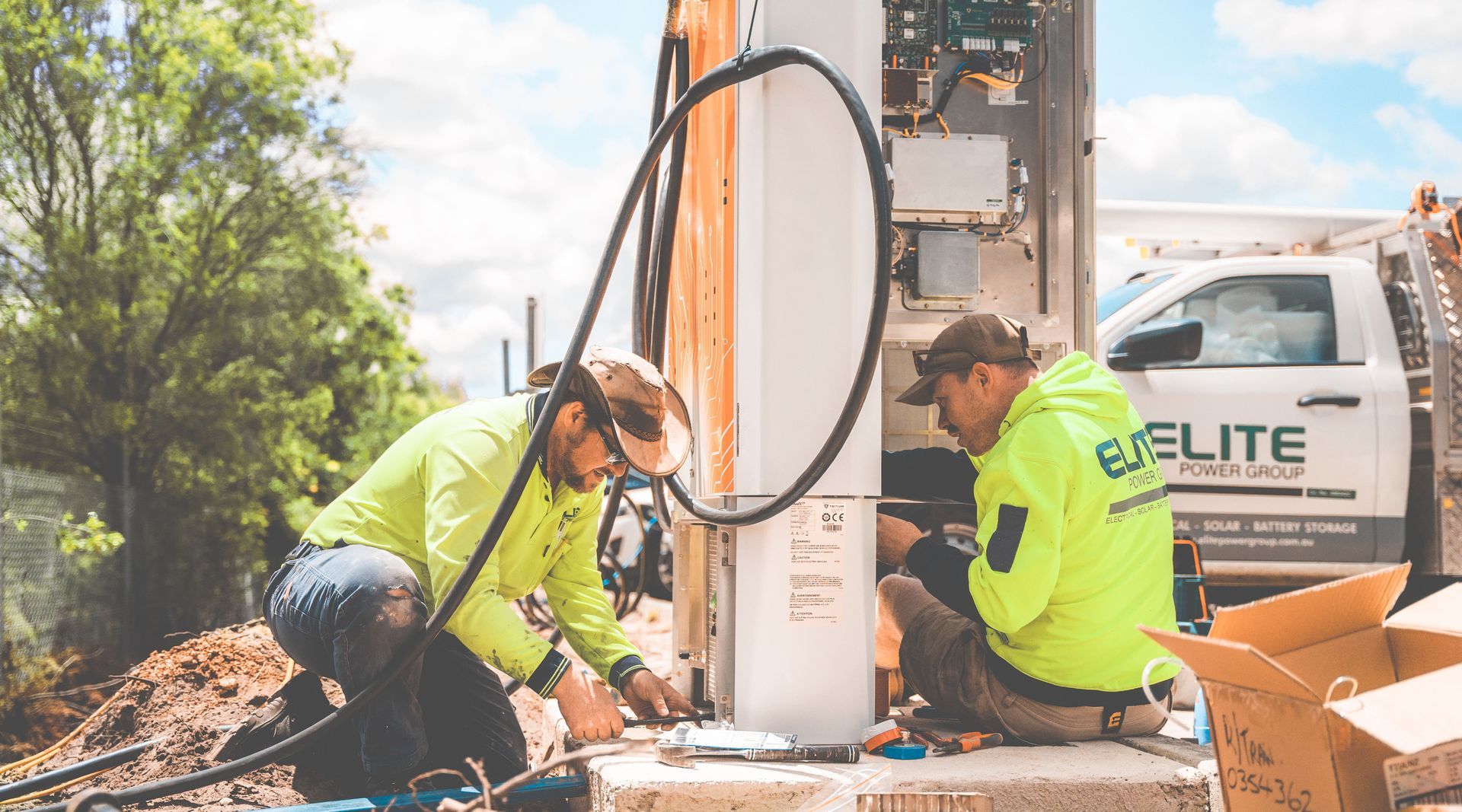
Every job you do is local content waiting to be used. A quick before-and-after photo pair from a bathroom in Aspley, a driveway in Wynnum or a switchboard in Kedron, posted to your Google Business Profile and added to the relevant suburb and service pages with a one-line caption naming the suburb and the work, does three things at once: it proves you work there, it gives Google fresh local signals, and it gives customers the evidence they're looking for. Ten seconds with a phone at the end of each job, and a habit of uploading them weekly, is one of the cheapest local SEO activities there is.
What to expect and when
Local SEO for tradies moves faster than SEO for most businesses because the map pack responds quickly to profile and review changes:
- Weeks 2 to 6: Google Business Profile improvements show in map pack visibility for your base suburb and nearby areas.
- Months 2 to 4: Suburb and service pages start ranking for lower-competition suburb searches.
- Months 4 to 8: Page-one positions across most of your target suburbs. Organic calls become a steady share of enquiry.
- Month 9 onward: Rankings consolidate and organic often overtakes paid as the main source of calls.
Sydney and Melbourne take longer for popular trades; regional and outer-suburban markets move faster. Our guide to how long SEO takes for a construction business covers the timeline by starting position.
A monthly routine that takes an hour
Local SEO doesn't need to be a second job. Once the profile, service pages and first suburb pages are built, a monthly routine keeps it moving:
- Upload the month's best job photos to your Google Business Profile with suburb captions (15 minutes).
- Reply to any reviews you haven't answered (10 minutes).
- Add one or two job photos with a caption to the relevant suburb pages (15 minutes).
- Check your profile details are still correct and nothing has been changed by Google or a user (5 minutes).
- Note any new suburb where you did several jobs; that's your next page (5 minutes).
Businesses that keep that routine for a year typically dominate their local map packs and hold page-one organic positions across their service area. It's not complicated. It's just consistent. Our complete guide to digital marketing for tradies shows where local SEO fits alongside everything else, and our lead generation service handles the whole thing if you'd rather stay on the tools.
Constructiv Digital provides local SEO for tradies and trade businesses across Australia, from Google Business Profile set-up through to suburb and service pages that rank. If you'd like to know which suburbs you're currently missing, get in touch with our team.