Renovation builders operate in one of the most competitive segments of the Australian construction market. Unlike new builds, where the brief is relatively straightforward, renovation clients arrive with an existing property, strong opinions, an uncertain budget and a fair amount of anxiety about disruption to their home and family.
That context shapes every decision Constructiv Digital makes when designing a renovation builder's website, and increasingly, it shapes how we optimise that site to be found and recommended by AI answer engines, not just Google's blue links. Below is what your site needs to achieve, and how we build with answer engine optimisation (AEO) in mind at every step.
The renovation client mindset
Renovation clients are more sceptical than new-build clients, for good reason. They've heard the horror stories: builders who vanished after the deposit, projects that blew out by months, budgets that ran 40% over. That scepticism is the default they arrive with, whether they're typing a search into Google or asking ChatGPT, Perplexity or Google's AI Overviews to shortlist a renovation builder near them.
This second behaviour is the shift AEO responds to. More renovation clients are starting their research with a conversational prompt like "who's a reliable kitchen renovation builder in Brisbane" rather than a keyword search, and getting a synthesised answer with two or three names in it. If your site isn't structured in a way these tools can parse and trust, you don't make that shortlist, no matter how good your work is.
At Constructiv Digital, we approach this by making sure every page answers the underlying question directly and early, in plain language, before it goes into supporting detail. Answer engines pull from content that states a clear answer near the top of a page; burying your value proposition under three paragraphs of scene-setting works against both a scrolling human and a crawling model.
Before and after project photography
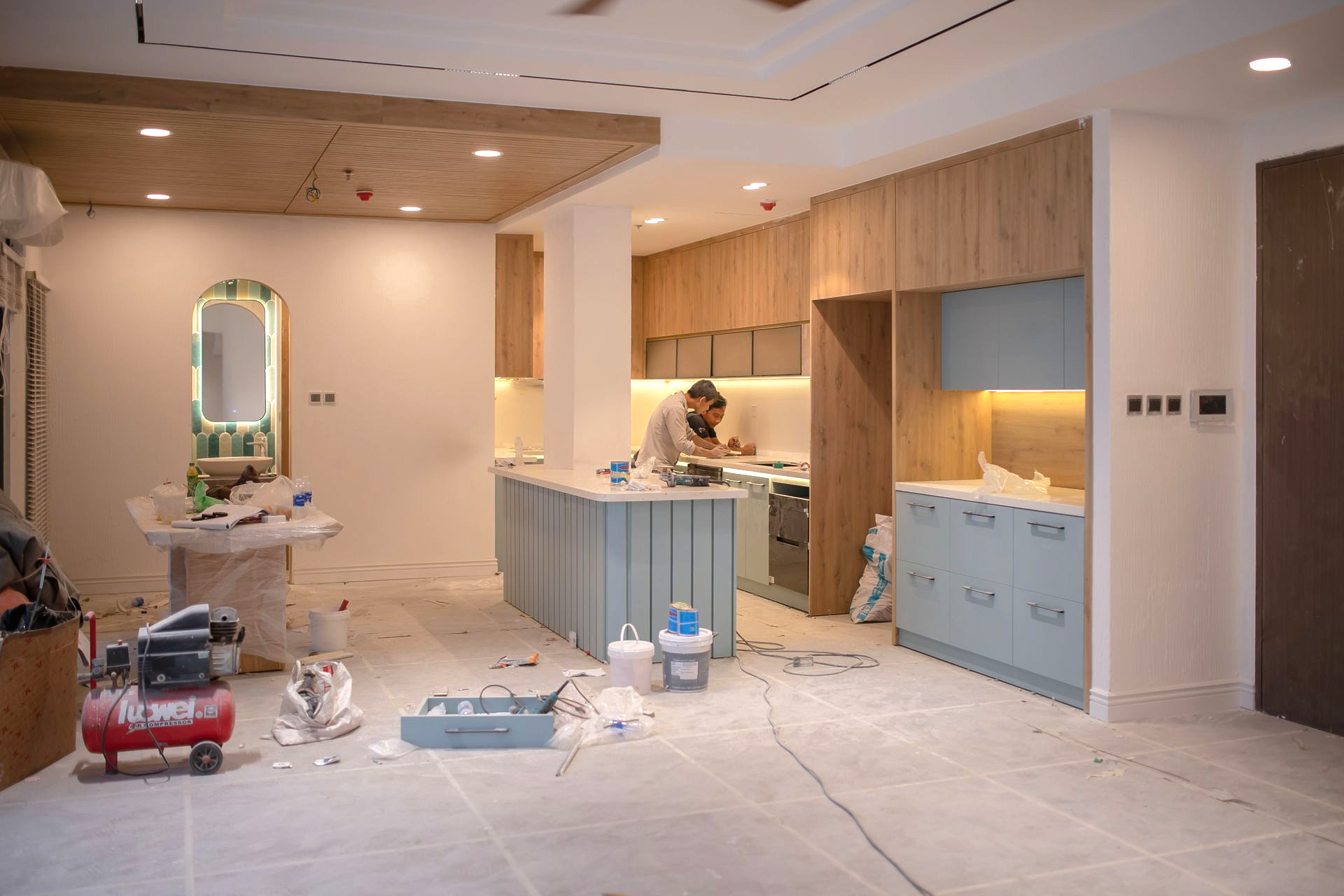
Before-and-after photography remains the single most persuasive content type on a renovation builder's site. A tired 1970s bathroom becoming a sleek, functional retreat says more than any amount of copy could. But a photo alone is invisible to an AI system unless it's paired with structured, descriptive text.
It's essential to organise before-and-after photography by project type, kitchens, bathrooms, whole-home renovations, extensions, and build each project as its own case study page with a written brief, the challenges, what was built and the outcome, rather than a bare thumbnail grid.
Practically, this means:
- Writing descriptive alt text and captions that state the suburb, project type and outcome in plain sentences
- Using structured headings and a short summary paragraph at the top of each case study that an answer engine can lift as a self-contained answer
- Marking up projects with schema so search and answer engines can reliably associate a photo, a suburb and a project type with your business
A photographer visiting two or three completed projects a year, timed just before the client fully settles in, is still one of the best investments a renovation builder can make. We simply make sure the resulting content is written to be understood by machines as well as admired by people.
Service pages built around renovation types
A single "Renovations" page listing every service in a few bullet points won't rank in Google, and it won't get surfaced by an AI answer engine either, because there's no clear, specific answer for either system to extract. People search "kitchen renovation builder Sydney" or ask an AI assistant "how much does a bathroom renovation cost in Melbourne", and your site needs a dedicated page that answers each of these directly.
We build individual, substantial service pages, kitchens, bathrooms, extensions, heritage renovations, second-storey additions, granny flats, each covering what's included, the typical process and timeline, what drives pricing, relevant completed projects and service-specific testimonials. For AEO, we go a step further and structure part of each page as direct question-and-answer content: a short, explicit answer to the exact question a prospective client (or their AI assistant) is likely to ask, followed by the supporting detail underneath.
Local detail matters just as much for AEO as it does for traditional local SEO. A page targeting "kitchen renovations Brisbane" should reference Brisbane councils, common Brisbane home configurations and completed Brisbane projects, because this specificity is exactly what helps an answer engine confidently attribute your business to a local query, rather than defaulting to a national competitor with a broader but shallower footprint.
Transparency about process and pricing: the content answer engines quote
Pricing anxiety is one of the biggest barriers to a renovation enquiry. Most prospective clients hesitate to contact a builder because they're unsure if their budget is realistic, or they've been burnt by a quote that bore no resemblance to the final invoice.
A dedicated "how it works" page, walking through the initial consultation, how estimates are developed, how variations are managed and what handover looks like, resolves this anxiety more effectively than generic promises of "quality" ever will. It's also exactly the kind of clear, structured, factual content that answer engines favour when compiling a response, since it can be summarised confidently without risk of misrepresenting you.
We also recommend including indicative cost ranges by project type, for example "bathroom renovations typically range from $15,000 to $45,000 depending on scope and finish," with a plain explanation of what drives the variation. Beyond helping clients self-qualify before enquiring, specific figures like this are the sort of concrete, quotable fact an AI assistant can pull into a direct answer, whereas vague pricing language gives it nothing to work with.
Reviews, testimonials and trust signals
Renovation clients read reviews more carefully than almost any other construction buyer, and they're increasingly reading them via an AI-generated summary rather than scrolling Google reviews themselves. Generic five-star ratings carry little weight; detailed testimonials describing the suburb, the project type, how communication and variations were handled, and the end result carry far more, for a human reader and for an answer engine summarising your reputation.
We prioritise collecting and publishing these detailed reviews across the homepage, relevant service pages and the contact page, and we mark them up with schema so their content, rating and detail are machine-readable rather than just visually present. We pair this with verifiable trust signals: a licence number linked to the relevant state register, insurance details, industry memberships like HIA or Master Builders, and a clear physical address. These aren't just reassuring to a sceptical homeowner, they're also the kind of independently verifiable facts that give an AI system confidence in citing your business rather than a competitor's.
Making the first step easy: for clients and for AI-assisted research
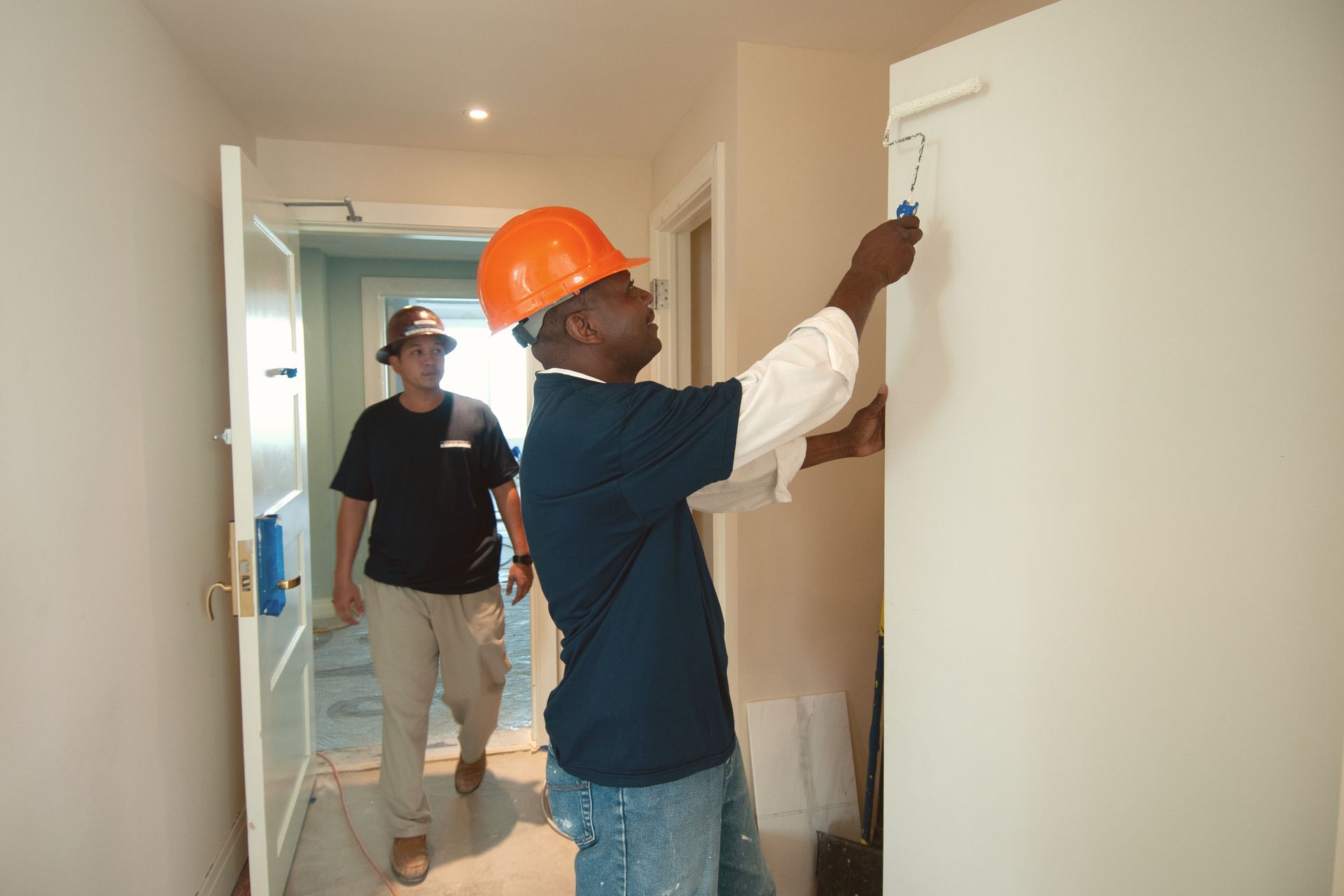
The final job of a renovation builder's website is to make enquiring as frictionless as possible. Most renovation clients research for weeks or months before reaching out, and by the time they're ready, any friction can cost you the enquiry, whether that friction is a buried contact form or a page that gives an AI assistant nothing concrete to recommend.
Keep the contact form short: name, email, phone, suburb and a brief project description is enough to start a conversation. Consider a clear, low-risk call to action like "free 30-minute site visit and feasibility chat" on the homepage and service pages. It gives a still-anxious prospective client an easy first step, and it gives an answer engine a specific, actionable offer to surface alongside your name.
How this fits together
Traditional SEO and AEO aren't separate disciplines requiring separate content, they reward the same underlying qualities: clear answers, genuine specificity, local relevance and verifiable trust signals.
Constructiv Digital builds renovation builder websites with both in mind from the outset, structuring content so it ranks well in traditional search, reads naturally for an anxious homeowner, and gives AI answer engines exactly what they need to recommend you with confidence. If you'd like to discuss how your current website is performing across both fronts, get in touch with our team.