By Greg Radford, Constructiv Digital. Last updated 28 October 2026.
Modular and prefab building companies market best by showing the process: factory builds, crane-day installs and finished homes or buildings, shared on social media and backed by a website that answers cost, approval, finance and delivery questions clearly. Buyers are curious but cautious about prefab, so content that proves quality and explains the process wins the enquiry.
This guide covers marketing for modular homes, granny flats, transportable buildings, classrooms, site accommodation and commercial prefab across Australia. Social media does a lot of the heavy lifting for this sector, and our social media marketing team works with builders and manufacturers to make the most of it.
In this article
What makes marketing modular and prefab buildings different?
Most construction marketing has to prove you can do the job. Prefab marketing also has to overcome doubts about the product itself. Common buyer concerns include:
- Quality. "Will it feel like a real home or a temporary building?"
- Approvals. "Do I need council approval, and who handles it?"
- Finance. "Will a bank lend on a modular home?"
- Site and transport. "Can it get to my block, and what site works are needed?"
- Total cost. "What's included, and what isn't?"
Your marketing should answer every one of these before the buyer has to ask. The speed advantage of off-site construction and the controlled factory environment are genuine selling points, but only once the doubts are dealt with.
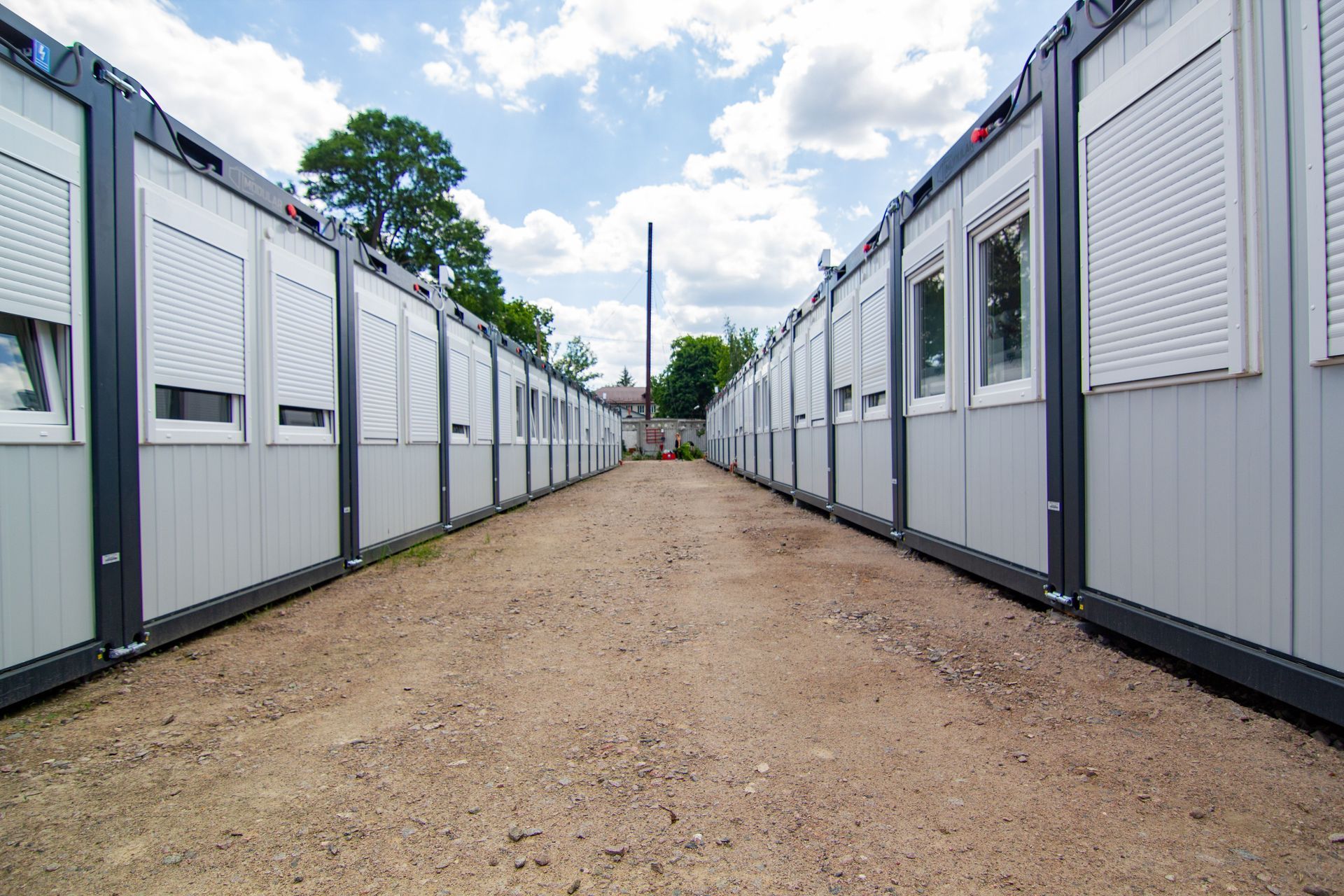
Who buys modular and prefab buildings?
| Buyer |
Typical products |
Best channels |
| Homeowners |
Modular homes, granny flats, studios, holiday homes |
Instagram, Facebook, YouTube, Google search |
| Developers and builders |
Multi-unit modules, volumetric and panelised systems |
LinkedIn, industry events, direct outreach |
| Schools and government |
Classrooms, clinics, community buildings |
Tenders, panels, capability statements |
| Mining and resources |
Site accommodation, offices, crib rooms |
Prequalification, LinkedIn, Google search |
| Farmers and regional buyers |
Workers' cottages, sheds, transportable homes |
Facebook, Google search, rural media |
Why does social media work so well for prefab builders?
Prefab is unusually visual. A home built in a factory, craned onto a slab and handed over within weeks is exactly the kind of story that stops people scrolling. The strongest content includes:
- Crane day. Modules being lifted into place is the most shareable moment in the whole build.
- Factory tours. Framing, fit-out and quality checks show buyers the process they're nervous about.
- Timelapses. From empty block to finished home in 60 seconds.
- Walkthroughs. Finished homes filmed room by room, so buyers see they don't feel temporary.
- Owner stories. Why they chose modular and what surprised them.
- Myth-busting. Short videos answering the approval, finance and quality questions.
Paid social turns that content into enquiries. Facebook and Instagram ads let you target homeowners, regional buyers and people interested in granny flats or tiny homes. Constructiv Digital's work for The Advanced Group shows the pattern, with Facebook Ads driving 1,043 landing page views in six months alongside strong paid search results.

What should a modular builder's website include?
- Designs or models with floor plans. Each on its own page with sizes, inclusions and a starting price.
- A clear "what's included" breakdown. Separate the module price from site works, transport, craneage, connections and approvals.
- A step-by-step process page. From enquiry and design to factory build, delivery and handover, with typical timeframes.
- Approvals and finance guides. Plain-English explanations for each state you deliver to.
- Delivery area information. Where you can deliver, and what access a site needs.
- Quality and compliance. How your builds meet the National Construction Code, your warranties and your licences. Membership of an industry body such as prefabAUS adds credibility.
- Display homes and factory tours. Where and when buyers can see a finished build.
- Project galleries. Real installed homes and buildings, not just renders.
How do you generate modular building leads with SEO and ads?
SEO should target the questions buyers ask: "modular homes Queensland", "granny flat cost", "do I need council approval for a granny flat", "transportable homes regional NSW". Each product type and each state or region you serve deserves its own page, supported by guides on cost, approvals and finance.
Google Ads works for high-intent searches such as "modular home builders near me" and "prefab granny flat price". Send traffic to model pages with prices and a clear enquiry form, not your homepage.
Retargeting matters more than usual, because prefab buyers research for months. Show walkthroughs and owner stories to people who've visited your model pages but haven't enquired.
Follow-up closes the loop. Send a brochure, invite enquirers to a display or factory tour, and follow up by phone within a day.
Frequently asked questions
How do modular home builders get more leads?
By combining visual social content, especially crane-day and walkthrough videos, with a website that answers cost, approval and finance questions, plus targeted Google Ads and retargeting.
What is the best social media platform for prefab builders?
Instagram and Facebook for homeowners and regional buyers, YouTube for walkthroughs, and LinkedIn for developers, government and mining clients.
Should modular builders show prices on their website?
Yes. Starting prices with a clear list of what's included and excluded build trust and filter out enquiries that don't fit the budget.
How can prefab builders overcome quality concerns?
Show the factory process, film finished homes in detail, share owner stories, and explain your compliance, warranties and quality checks.
Want more enquiries for your modular or prefab builds? Talk to the Constructiv Digital social media marketing team or book a free consultation.