Most construction company About Us pages say the same things: "Family-owned and operated." "Over 20 years of experience." "Quality workmanship guaranteed." These phrases are so overused they've lost all meaning, and visitors skip right past them. That's a problem, because a well-written about page is often the difference between a visitor who enquires and one who bounces.
People hire people, not businesses. Your about page is where that human connection happens. Here's how to write one that actually builds trust, differentiates your company, and moves undecided visitors closer to picking up the phone.
What your about page is actually for
Visitors don't land on your about page first, they arrive via a service page or a Google search. By the time they click About Us, they're interested but not yet convinced. They're asking: who are these people, can I trust them, and do they seem like someone I'd want on my site for the next six weeks?
Your about page doesn't need to be long. It needs to be honest, specific, and human. A short, well-written about page that tells a real story converts better than a long, corporate-sounding one that avoids saying anything concrete.

Lead with your story, not your credentials
The most effective about page openings are concrete and specific: "Marcus started Smith Constructions in 2003 after 12 years as a site supervisor for a Tier 2 builder. He got tired of watching clients get underserved by companies that prioritised volume over quality, and wanted to build something smaller and better." That's more compelling than "We are a leading construction company with over 20 years of experience."
If your story is that you're a second-generation business, tell it. If you started the company because you had a bad experience as a client and wanted to do it better, say so. Authenticity is persuasive precisely because it's specific, and specificity signals confidence.
Show the people behind the business
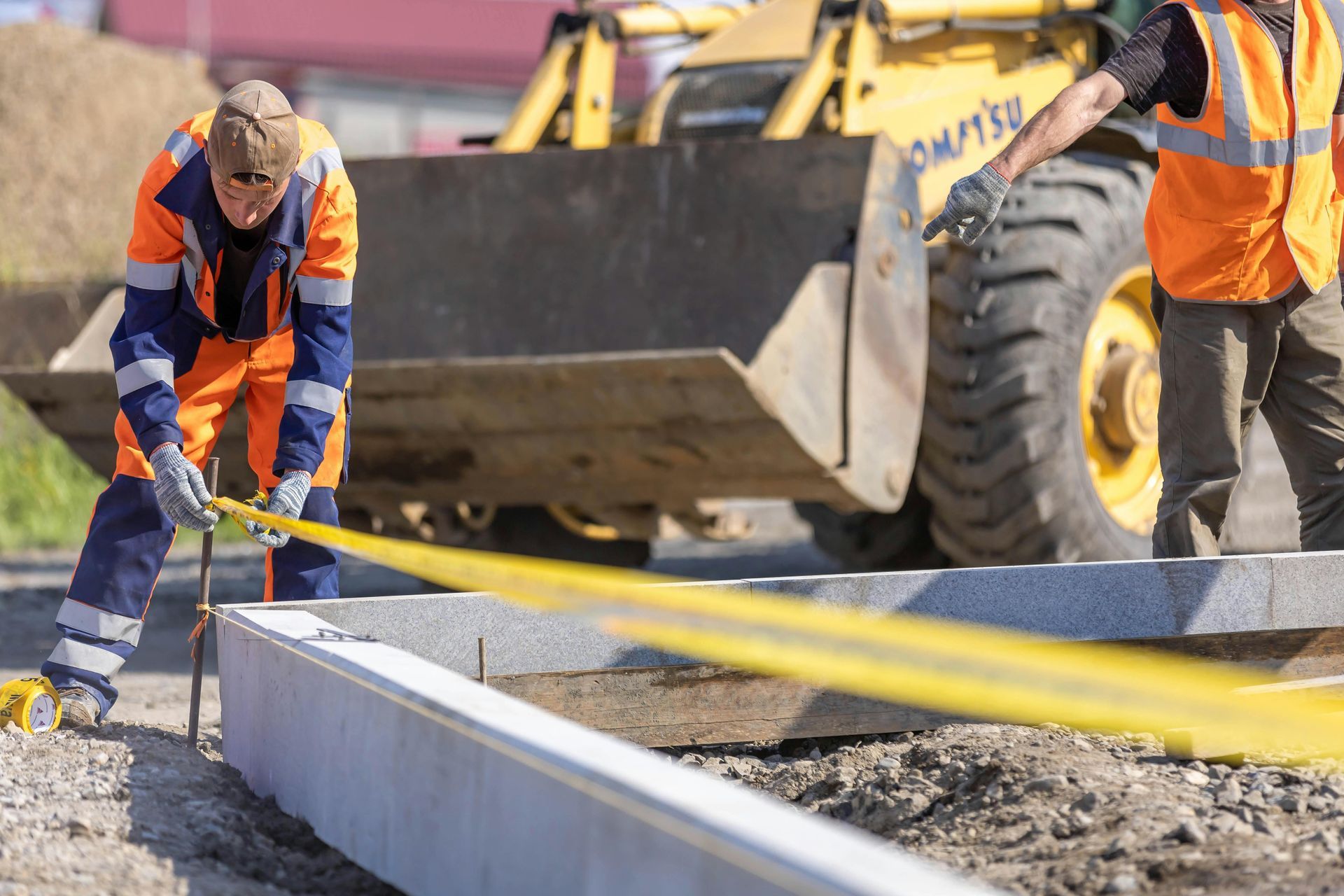
Real photos of the actual people who will work on a client's project are one of the most effective trust signals on a construction website. Humans are wired to trust faces, and seeing a real person associated with a business makes the prospect of engaging them feel significantly less risky.
For small-to-medium construction businesses, this typically means: a photo of the director or founder with a short bio (background, role, what they focus on day to day), brief introductions to key team members (project manager, site supervisor, estimator if relevant), and candid shots of the team on site or in the office. These don't need to be professional photoshoot quality: a well-lit, genuine photo taken on a modern phone is far better than no photo at all.
Make your values specific, not vague
"Quality, integrity, and reliability" appears on roughly 80% of construction about pages. These words are so generic they communicate nothing. If you're going to talk about your values, make them specific to how you actually run your business.
Instead of "we value quality workmanship," try: "Every project gets a pre-handover inspection with the client present. If there's anything that doesn't meet our standard, we fix it before we invoice." Instead of "we believe in honest communication," try: "Our clients get a fortnightly written update on progress, variations, and anything unexpected. No surprises at invoice time." Specific, behavioural commitments are far more convincing than abstract values, because they show rather than tell.
If you have specific differentiators like SWMS documentation, particular safety standards, a process for managing variations, or the way you handle defects, your about page is the right place to articulate them. These details matter to commercial clients in particular, who are assessing whether you're a contractor they can hand a project to and trust.
End with a clear next step
Most about pages trail off without a call to action. A visitor has read your story, looked at your team, and decided they like you, but then hit a dead end with no obvious next move. Don't let that happen. End your about page with a direct invitation: "If you'd like to discuss a project, we'd be glad to hear from you. Call [number] or [get in touch here]."
You can also link to your most relevant service pages or a recent case study from the about page to give interested visitors a natural path deeper into the site. The about page isn't where the sale closes, but it's often where trust is won or lost. Don't waste the moment.
Constructiv Digital writes and structures construction website content for Australian contractors. If you'd like to discuss how your current about page is performing, get in touch with our team.